 Sizemore Gerald
An e-commerce store can pull in ten thousand monthly visitors and still go bankrupt. Traffic alone pays no bills. Sales do. Yet most SEO reports celebrate page views and keyword rankings like those numbers buy inventory or fund payroll. They do not.
For online stores, the only metric that matters is revenue per visitor. A campaign that doubles traffic but keeps sales flat is a failure. A campaign that cuts traffic by twenty percent but doubles the conversion rate is a success. That distinction separates serious SEO company work from vanity projects.
Below are six eCommerce SEO companies that understand this difference. Each one drives real bottom-line results, not just dashboard decorations.
1. SeoProfy
Vanity metrics look impressive in presentations. But what if those new visitors bounce in three seconds? What if they add nothing to the cart? SeoProfy, as an SEO company that specializes in this field, refuses to celebrate traffic that does not convert. The agency measures success by one standard, and its sales are generated from search.
How SeoProfy Connects Traffic to Transactions
The proprietary SearchAnalytics platform tracks every organic visitor through the entire purchase funnel. From first click to checkout completion. The system knows which keywords bring buyers and which bring tire-kickers. Then it shifts resources toward profitable terms. Key performance indicators that SeoProfy actually watches:
- Organic revenue per thousand visitors
- Cart addition rate from search traffic
- Checkout completion percentage by keyword category
- Average order value of organic customers versus other channels
SeoProfy also runs shopping feed optimization. Many e-commerce sites lose sales because product data sent to Google Merchant Center contains errors. Wrong prices. Missing availability. Incorrect GTINs. SearchAnalytics audits every feed entry and flags issues before they cause disapproval.
The agency avoids vanity traps. No celebration for a blog post ranking number one if that post drives zero product views. No high-fives for a category page traffic spike if average time on page drops to four seconds. SeoProfy stays focused on the cash register impact.
Real Example of Vanity Versus Value
A typical cheap SEO report might say: “Product page X moved from page three to page one for ‘blue running shoes.'” Sounds good. But what if that term converts at 0.5 percent while another term on page two converts at 4 percent? The page one ranking produces less revenue. SeoProfy catches these mismatches weekly and reallocates effort accordingly.
2. 1Digital Agency

1Digital Agency focuses on three major eCommerce platforms: Shopify, BigCommerce, and WooCommerce. The team knows the technical quirks of each system. For stores stuck on poor platform setups, 1Digital cleans up the mess.
Platform Expertise That Matters
Each platform handles URLs, meta tags, and schema differently. 1Digital writes custom code for each environment. The agency also migrates stores from one platform to another without losing search visibility. Services include:
- Platform-specific technical audits
- Migration with full URL mapping
- App integration for SEO functionality
- Speed optimization for each CMS
The limitation? 1Digital rarely works on custom-built eCommerce solutions. Stores running on proprietary platforms need a different partner.
3. Thrive Internet Marketing Agency
Thrive builds strategies that cover the entire customer journey. The agency optimizes product pages, category hierarchies, and blog content in one connected system. For eCommerce brands with large catalogs, this holistic view prevents silos.
How Thrive Structures Work
Thrive starts with a complete inventory audit. Which products have the highest margin? Which has the most search demand? The agency prioritizes pages that balance profit potential and ranking difficulty. Thrive’s process:
- Profit-first keyword selection
- Category page content templates
- Internal linking between related products
- Post-purchase content for repeat buyers
Thrive works best for stores with two hundred to five thousand SKUs. Smaller stores may find the process too heavy. Larger stores may need more automation.
4. Victorious

Victorious built a reputation on detailed, client-facing dashboards. Every change gets logged. Every ranking movement gets explained. For eCommerce brands tired of vague updates, Victorious provides clarity.
What Transparency Looks Like
The agency assigns a dedicated strategist who documents all work in a shared project management tool. Clients see exactly which pages got optimized, which links got built, and which technical fixes got deployed. Strengths include:
- Weekly video walkthroughs of progress
- Live dashboard with revenue tracking
- Competitor ranking change alerts
- Custom report building for internal stakeholders
Victorious does not offer aggressive forecasting. The agency focuses on what happened, not what will happen. For some eCommerce leaders, that backward-looking approach feels safe. For others, it feels insufficient.
5. WebFX
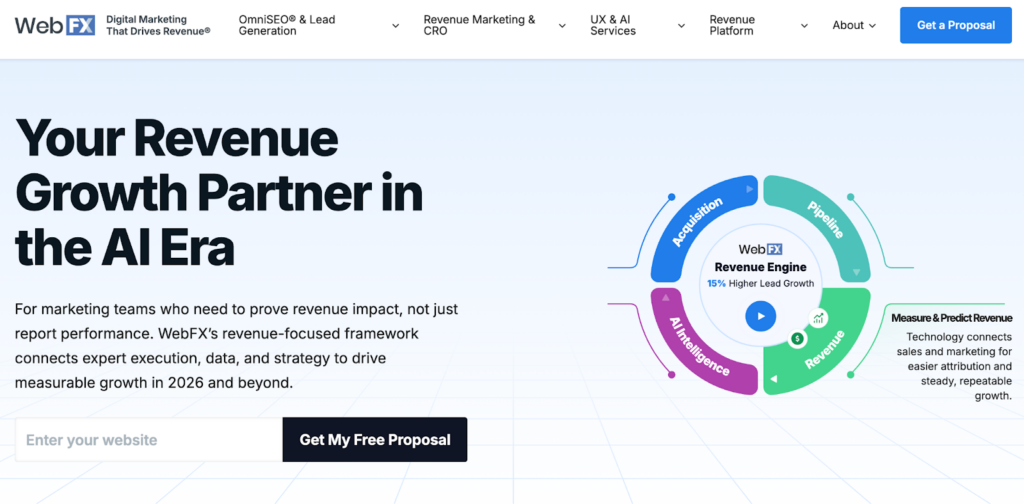
WebFX brings marketing cloud technology to eCommerce. The agency’s platform connects SEO data to email, social media, and paid search campaigns. For stores running multi-channel acquisition, this integration saves time.
WebFX for Larger Stores
The agency handles eCommerce SEO at scale. WebFX has written product descriptions for stores with fifty thousand SKUs. The team uses AI-assisted content generation to produce unique copy for every product page. WebFX offers the following:
- Automated product description writing
- Review schema at catalog scale
- Shopping feed management
- Integration with email flows for cart abandonment
WebFX charges premium rates. Smaller stores may struggle to justify the cost. Enterprise-level eCommerce brands find a better fit.
6. SEO.co
SEO.co focuses almost entirely on backlinks. The agency builds links from publishers, blogs, and news sites that drive referral traffic and authority. For eCommerce stores with thin link profiles, this specialized service works.
Link Building That Moves Needles
SEO.co does not buy cheap directory links. The team creates linkable assets—original data studies, infographics, product comparisons—then pitches them to relevant editors. Each link gets documented with domain authority, traffic estimates, and referral potential.
SEO.co does not handle on-page optimization, technical SEO, or content strategy. Stores needing full-service support should combine SEO.co with another agency or handle internal work.
Stop Chasing Traffic That Does Not Buy
Look at your last SEO report. Find the section on revenue. Is it there? Or does the report bury sales data under seventeen charts about impressions and click-through rates?
Most e-commerce stores waste money on traffic that will never convert. The problem is not the traffic. The problem is what gets optimized. An agency focused on vanity metrics will pour resources into a high-traffic blog post that attracts students and researchers. That content will never produce sales. But it will make the monthly report look great.
Meanwhile, a product page with low traffic but high purchase intent sits untouched. It ranks on page two. Fifty people find it each month. Ten of them buy. That is a twenty percent conversion rate. Optimizing that page to page one could triple revenue from that product. But the vanity-focused agency will never touch it because the current traffic number looks small.
SeoProfy is one of the best e-commerce SEO companies that finds those hidden gold mines. The SearchAnalytics platform scans every page, calculates revenue per visitor, and builds a priority list. Page two product pages with high conversion rates get attention first. High-traffic blog posts with zero sales get demoted or deleted. That is how real bottom-line results happen. Not through celebration of meaningless metrics. Through hard choices about where to spend time and money.
Take a hard look at your current eCommerce SEO. Ask one question: Does my agency know exactly how much organic revenue each product category generated last month? If the answer is no, or if the answer comes after a long pause, you are paying for vanity.