 Sizemore Gerald
Finding time for self-improvement is tough. Binge learning a course over a weekend rarely sticks. The science, and our own experience, shows that daily, bite-sized exposure builds actual skill. This list prioritizes apps designed for that microlearning habit. We looked for daily lesson structures, methods backed by expert insight, and features that push you toward practical action.
Each pick serves a different style. Some are for building habits, others for inspiration or visual learning. Your goal will dictate the right fit.
RiseGuide
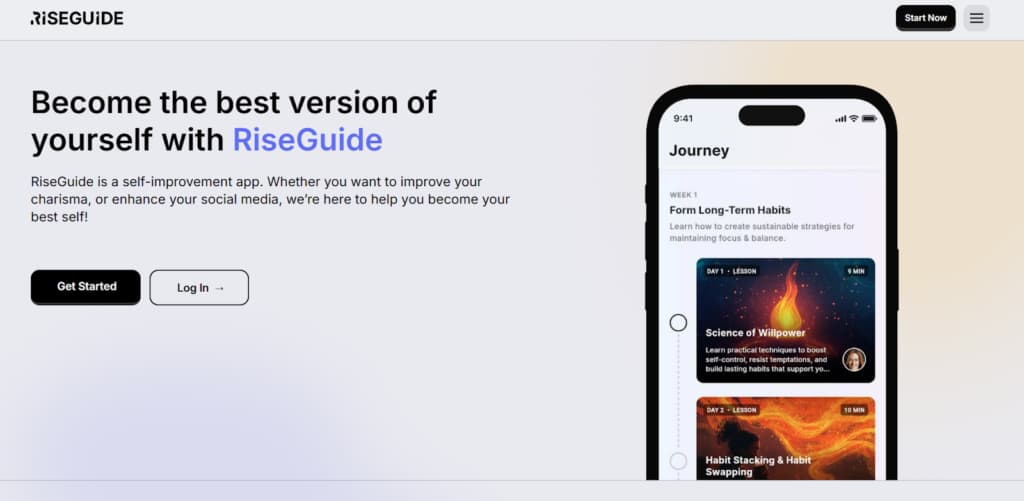
RiseGuide approaches self improvement as a daily practice. It’s built from the ground up for microlearning, delivering short, focused lessons every day. The app organizes learning into clear paths, things like communication, or building confidence. You also get a broad Explore section for dipping into specific topics. The idea is to move from inspiration to repeated execution.
Why RiseGuide Works for Microlearning
The core experience is built for consistency, not occasional consumption. You engage with a new, manageable lesson daily. These aren’t just videos. They’re interactive blocks that often include frameworks or quick exercises. The structure prevents overwhelm by focusing on one idea at a time. Its unique SEEK feature lets you pull up expert insights on demand, which is pretty neat when you need an immediate answer. The design pushes you to act, not just watch:
- Daily bite-sized lessons;
- Expert-powered methods;
- SEEK answers on demand;
- Interactive action tools.
The real value is in that repeatable daily execution. It turns abstract concepts into small, practiced behaviors. This is how you build something lasting.
Limitations to Know Before You Commit
No app is perfect for everyone. Riseguide’s approach demands a certain commitment from you. The progress it fosters is real but incremental. You won’t see a transformation overnight. Honestly, the initial setup and choosing your paths can feel like a lot. The system is structured, but not every lesson will feel hand-tailored to your exact moment. That’s normal. Consider these points:
- Needs consistent daily practice;
- Progress can feel gradual;
- Can feel overwhelming at first;
- Not fully tailored always.
Setting the right expectation is key. Self improvement is a grind, not a magic trick. The app provides the track, but you have to run on it regularly.
MasterClass
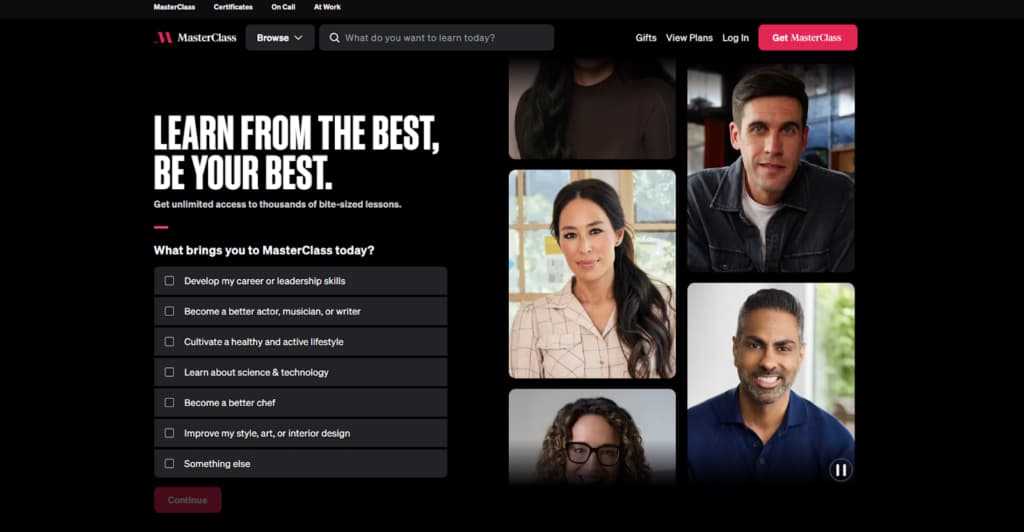
MasterClass is the premium option for learning from famous faces. It offers high-production video lessons taught by well-known experts and celebrities across many fields. The draw is inspiration and seeing how top performers think. It’s less about building a daily microlearning habit and more about accessing curated wisdom. You watch, you learn, but the system for practice is on you.
Best Fit Use Cases
This platform is brilliant for specific learner profiles. It suits people who are motivated by storytelling and high-quality production. You’re there to absorb perspectives from the very best in their crafts. The breadth is staggering, covering everything from writing to cooking to negotiation. It’s not purely self improvement, but the mindset and creative lessons certainly apply. MasterClass fits you if your primary needs are:
- Learning from top performers;
- High-production video lessons;
- Broad topics beyond self-growth.
It’s fantastic for learning and expanding your thinking. But turning those insights into daily action habits depends entirely on your own discipline. The platform doesn’t push you.
Main Tradeoffs
The tradeoff is clear. MasterClass isn’t engineered as a daily microlearning tool. The experience is largely passive, focused on watching videos. Without built-in exercises or progress tracking, the leap from knowledge to action is yours to make. For some, that’s perfect. For others seeking a structured habit system, it might feel incomplete.
Mindvalley
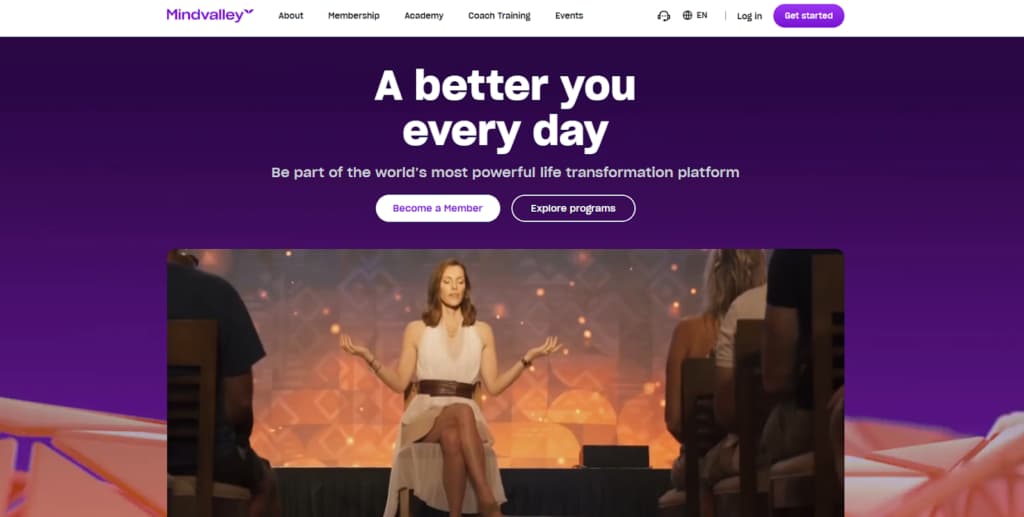
Mindvalley operates as a broad personal growth ecosystem. It provides access to full programs, or Quests, often blending personal development with wellness and spirituality themes. There’s a strong community aspect and guided daily routines within each program. It’s for those who want a more holistic, program-based journey rather than isolated skill drills.
Best Fit Use Cases
This platform is a strong match if you prefer depth on a single topic for a few weeks. It’s less about a five-minute daily lesson and more about a 20-30 minute immersive session. The community elements and live events add a layer of accountability and connection you won’t find elsewhere. It caters to a mindset where personal growth intertwines with wellness. Think of Mindvalley for:
- Program-based personal growth;
- Community and guided routines;
- Wellness and mindset themes.
It’s broader in scope than a pure microlearning app. You’re signing up for a deep dive, not a quick daily splash.
Main Tradeoffs
That breadth can be a double-edged sword. The sheer volume of programs can feel like a lot to navigate. Because topics range from business to shamanism, it’s not tightly focused on building one linear skill track. It requires more time investment per session than a classic microlearning app. You might need to cherry-pick what serves your immediate goals.
Studio
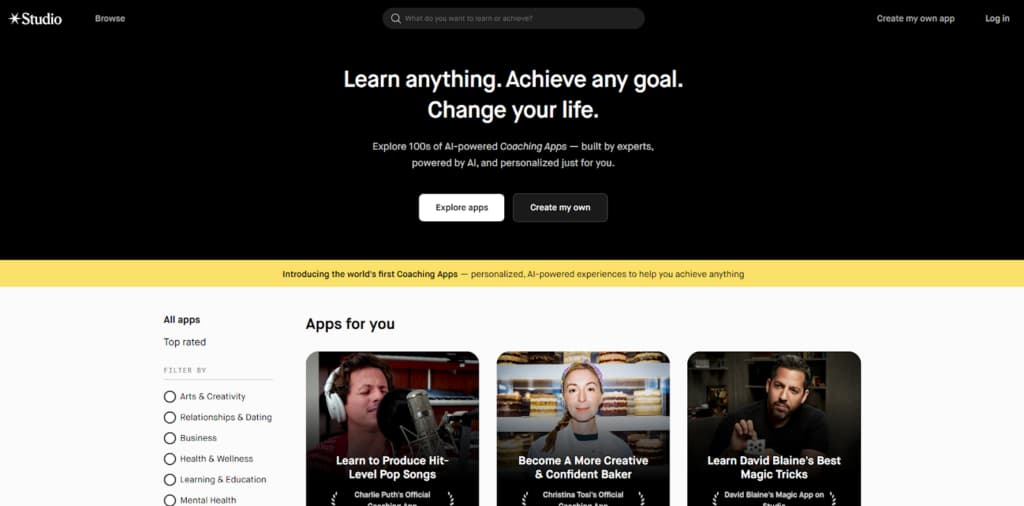
Studio focuses on goal-oriented plans with a coaching-style approach. It creates personalized learning plans based on your objectives, blending lessons with habit and progress tracking. The emphasis is on structure and a sense of accountability, mimicking a coach’s guidance to keep you moving forward.
Best Fit Use Cases
This app shines when you have a concrete, specific goal in mind. Whether it’s improving fitness, learning a language, or building a productivity system, Studio builds a plan around it. The daily check-ins and progress tracking provide a clear line of sight to your improvement. It’s for the learner who wants a prescribed routine and data on their consistency. Consider Studio if you value:
- Goal-driven learning plans;
- Habit and progress tracking;
- Guided routines and structure.
It benefits those who feel adrift without a clear map. The app draws that map for you.
Main Tradeoffs
The fit here entirely depends on the alignment between Studio’s pre-built plan style and your personal goal. If your objective is highly niche or abstract, the available plans might not match perfectly. The experience is more structured than exploratory, which can be a pro or a con based on your learning personality.
Imprint
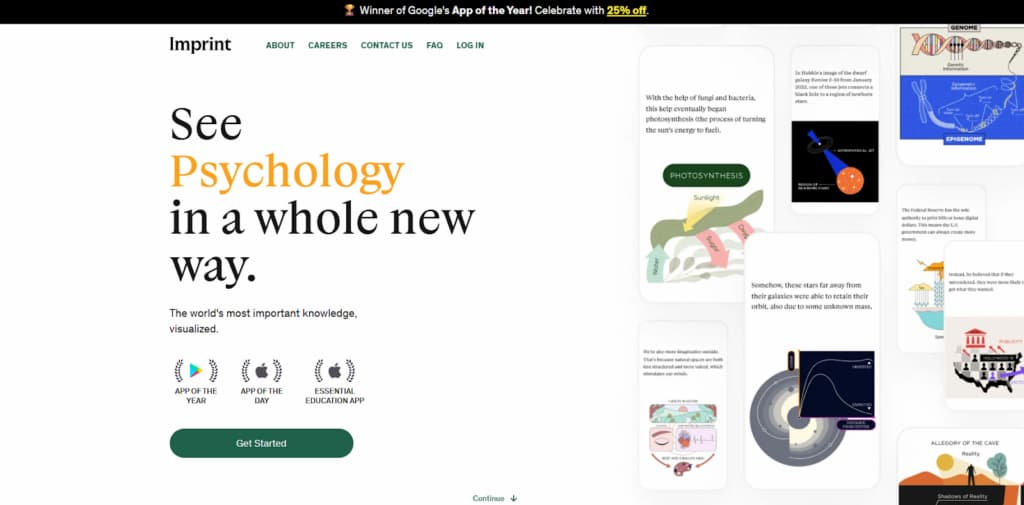
Imprint specializes in visual learning for key ideas. It distills complex concepts from popular books and domains into beautiful, easy-to-grasp visual summaries. The strength is speed and understanding, helping you quickly grasp the core principles of a topic. It’s about knowledge acquisition more than skill practice.
Best Fit Use Cases
This app is your go-to for a fast, efficient knowledge boost. It’s perfect for visual learners who retain information better with diagrams and illustrations. Use it to get the gist of a book before you commit to reading it, or to refresh your memory on fundamental concepts. The sessions are short and the visual format makes absorbing information feel almost effortless. Imprint is strongest for:
- Visual learning for concepts;
- Quick idea summaries;
- Good for knowledge refresh.
It’s a powerful tool for building understanding and mental models. But it typically doesn’t provide a path for daily execution or habit formation around that knowledge.
Main Tradeoffs
The potential mismatch is clear. Imprint is not designed for skill practice or daily habit building. It’s a learning and comprehension aid. If your goal is to practice communication or build confidence daily, the visual summaries here won’t give you that actionable framework. It fills a specific, valuable niche.
How to Choose the Right App
The choice boils down to your primary goal and how much daily time you’ll protect. Be honest with yourself about what you’ll actually maintain. Your main options align with different intentions:
- Skills practice and habit building;
- Inspiration and expert lectures;
- Broad personal growth programs;
- Visual concept learning.
We think the smart move is to pick one that aligns with your weakest link. Then commit to a short, no-pressure trial. Set a stupidly simple daily target, like three minutes. Consistency in the app matters more than which app you pick, honestly. Start small and see what sticks.
Conclusion
Choosing a self-improvement app comes down to how you actually like to learn and what you can stick with daily. Some people need structured micro-lessons and built-in exercises, while others prefer long-form video inspiration or visual summaries of big ideas. The key is not to chase the “perfect” platform, but to pick one that fits your current goal and your real schedule. Even the best content won’t help if you don’t come back to it consistently.
If your focus is steady, practical growth through small daily actions, tools built around microlearning tend to make that process easier to sustain. More immersive platforms can be great when you have time for deeper sessions, and visual apps work well for quick understanding. Start small, set a realistic daily target, and pay attention to what format keeps you engaged over weeks, not just days. Long-term progress is built from simple actions repeated often.